
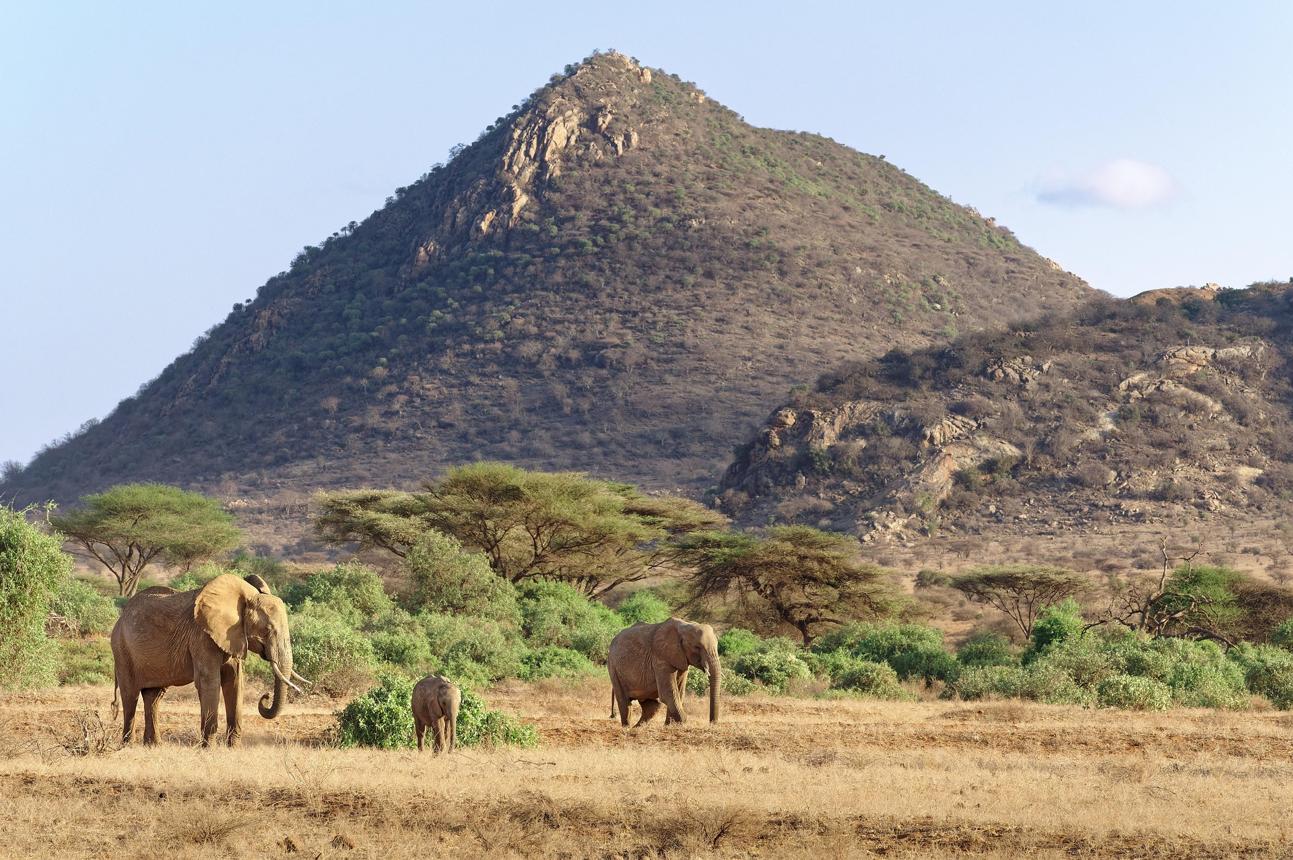
If you have already experienced Kenya's classic southern safari circuit, northern Kenya can feel like entering another country.
The landscape changes.
The vegetation becomes more rugged.
The mountains and rocky hills create dramatic horizons.
And the wildlife includes species that are particularly associated with the north.
Welcome to Samburu.
A different safari landscape
Samburu's dry environment creates an atmosphere that feels raw and dramatic.
Here, wildlife has adapted to conditions that can be challenging.
The region is particularly famous for several northern species, including Grevy's zebra, reticulated giraffe, gerenuk and Beisa oryx.
That makes Samburu especially attractive to travellers who want something beyond the standard Big Five checklist.
Wildlife and culture
A Samburu safari can also introduce travellers to one of Kenya's distinctive cultural landscapes.
The key is respectful engagement.
Cultural experiences should provide genuine opportunities to learn about local traditions and everyday life rather than treating communities as attractions.
A photographer's paradise
The light in northern Kenya can be extraordinary.
Early mornings produce long shadows across the dry landscape.
Late afternoons turn the hills golden.
Wildlife silhouettes beautifully against the horizon.
And because the environment is so different from the lush landscapes many visitors imagine when they think of Kenya, photographs from Samburu can have an unmistakable character.
Why go north?
Because Kenya is not one safari.
It is many safaris.
Every ecosystem tells a different story.
Samburu's story is one of adaptation, resilience, culture and extraordinary wilderness.
For travellers seeking something genuinely different, it belongs high on the list.