
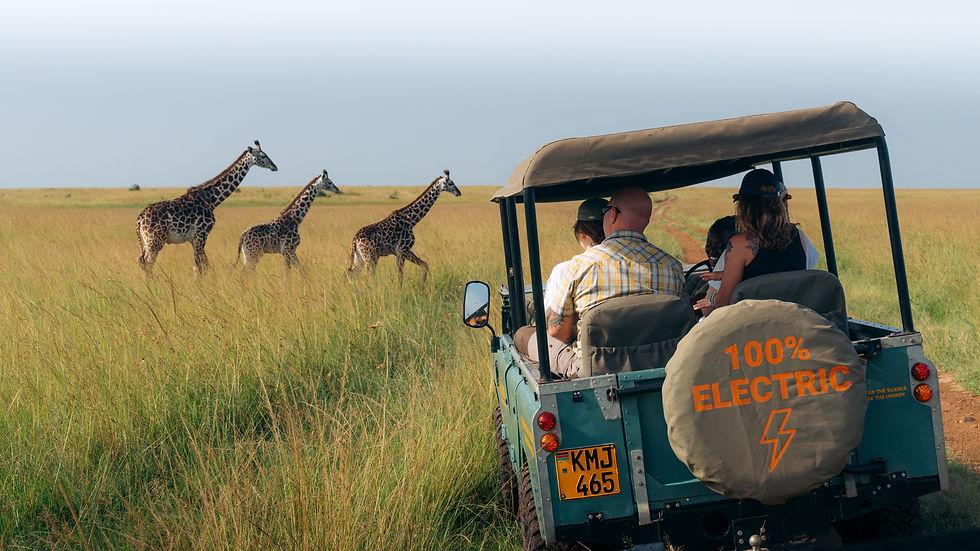
Imagine approaching a herd of elephants without the familiar rumble of a diesel engine.
There is no sudden acceleration.
No loud gear changes.
Just the sound of wind moving through the grass and birds calling somewhere nearby.
This is the promise of the emerging silent safari.
Electric vehicles are increasingly being explored within African tourism because they can reduce vehicle noise and emissions. Recent reporting has highlighted how electric safari vehicles are being introduced or tested in several African destinations, including Kenya.
Why silence matters
Wild animals experience sound differently from humans.
A conventional safari vehicle can become part of the background, but reducing unnecessary mechanical noise may create a calmer viewing environment.
For visitors, the difference can be remarkable.
Instead of hearing the vehicle, you hear the wilderness.
A distant lion calling.
The wings of a bird.
An elephant breaking a branch.
The sounds become part of the safari experience.
Technology meets conservation
Electric safari vehicles are not a magic solution to every environmental challenge.
Charging infrastructure, vehicle range, terrain and operating costs still matter.
However, the technology demonstrates an important direction for the industry: using innovation to reduce the footprint of tourism while improving the guest experience.
What safari could look like tomorrow
Imagine a morning game drive where your vehicle quietly moves across the savannah.
You stop.
The engine is almost silent.
A herd of buffalo continues grazing.
A giraffe looks briefly in your direction before returning to feeding.
Nothing feels rushed.
That is the kind of experience that makes a safari feel genuinely immersive.
At Beyond the Ordinary Safaris Ltd, the future of safari should not mean losing the authenticity of the wilderness. It should mean finding smarter ways to experience and protect it.